
Embarking on a weight loss journey can feel like navigating through a maze of conflicting advice and confusing information. Among the myriad of suggestions, one aspect stands out as crucial: protein intake. But how much protein do you actually need daily to optimize your body’s fat-burning potential? Let’s unravel this mystery together using a simple yet effective tool – the protein intake chart.
First things first, let’s convert your total body weight into kilograms. This conversion is essential for accurate calculations. Simply divide your weight in pounds by 2.2 (Lbs/2.2). For instance, if you weigh 200 pounds, your weight in kilograms would be approximately 90.9 (200/2.2=90.9).
Now, armed with your weight in kilograms, let’s delve into the heart of the matter. The recommended protein intake varies depending on several factors, such as your weight, activity level, and weight-loss goals. To streamline this process, we’ve crafted a convenient chart to guide you through determining your optimal protein intake.
Here’s a sneak peek into how it works:
Imagine you weigh 200 pounds and aspire to shed those extra pounds. You engage in moderate cardio exercises daily to aid your weight-loss journey. According to our chart, for someone of your weight and activity level, the recommended protein intake stands at 1.6 grams per kilogram of body weight. Applying this formula to your weight in kilograms (90.9 kg), we find that you need approximately 145 grams of protein daily to support your weight-loss efforts.
Now, armed with this knowledge, you can confidently tailor your diet to meet your body’s needs, maximizing your chances of success on your weight-loss journey.
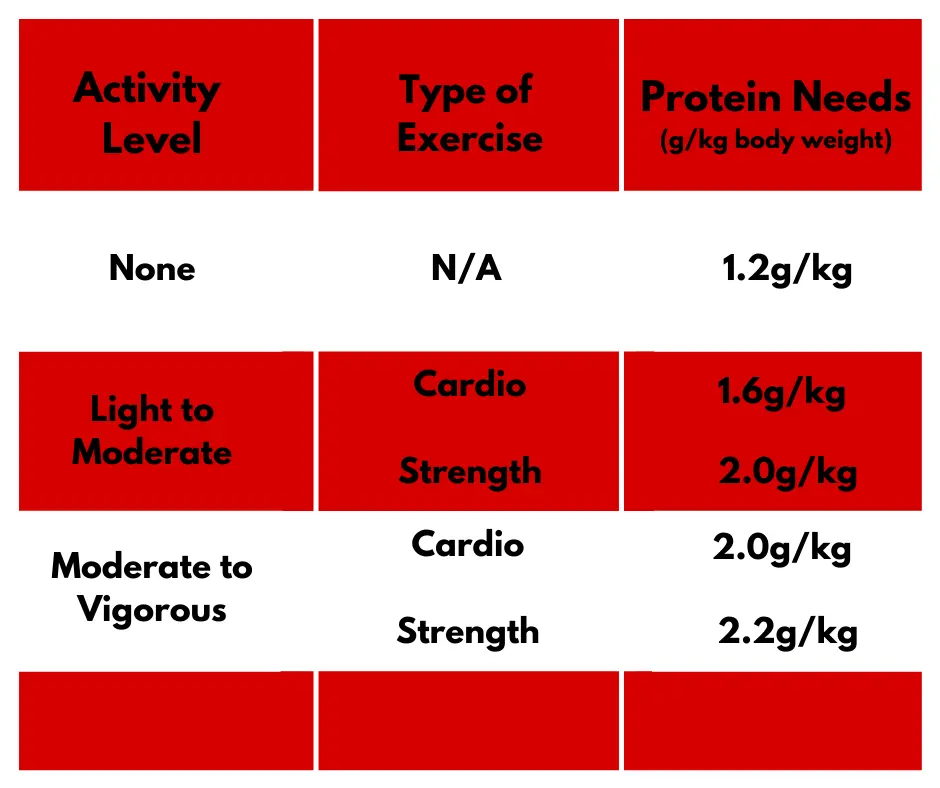
Let’s break down what each activity level entails:
- Light Activity: Light activity encompasses movements that are relatively gentle on the body and don’t significantly elevate heart rate or breathing. Examples of light activities include:
- Walking at a leisurely pace
- Doing household chores such as light cleaning or cooking
- Engaging in gentle yoga or stretching exercises
- Performing tasks that involve minimal physical effort, such as sitting or standing
- Moderate Activity: Moderate activity involves exerting oneself at a level that noticeably increases heart rate and breathing, yet still allows for sustained conversation. Examples of moderate activities include:
- Brisk walking or hiking
- Cycling at a moderate pace
- Swimming
- Dancing
- Playing recreational sports such as tennis or volleyball
- Vigorous Activity: Vigorous activity involves high levels of exertion that significantly elevate heart rate and breathing, making it difficult to sustain a conversation. Examples of vigorous activities include:
- Running or jogging at a fast pace
- High-intensity interval training (HIIT)
- Aerobic exercises such as jumping rope or kickboxing
- Competitive sports like soccer or basketball
- CrossFit or circuit training
In conclusion, protein serves as a cornerstone in the realm of weight loss, offering a potent combination of satiety, metabolic boost, and muscle preservation. By harnessing the insights provided by our protein intake chart, you can fine-tune your dietary choices and propel yourself closer to your weight-loss goals.
Remember, knowledge is power. Arm yourself with the right information, and embark on your weight-loss journey with confidence, knowing that you hold the key to unlocking your body’s full potential.